Glass Room vs Glass Veranda: Key Differences Explained
If you’re looking to extend your outdoor living space, two products tend to dominate the shortlist: glass rooms and glass verandas. At first glance they can look remarkably similar — both use glass overhead, both attach to the rear of the house, and both are designed to help you enjoy your garden in more comfort. But the differences in how you’ll actually use them day-to-day are significant.
This guide cuts through the confusion. By the end you’ll understand exactly what separates a glass room from a glass veranda — in structure, seasonal use, planning, and cost — so you can make the right decision for your home and lifestyle.
SBI are a family-run business, established in 1998, with more than 400 five-star reviews. We design, supply and install both glass rooms and glass verandas across Kent, the South East and throughout England and Wales. If you’d like to discuss which option suits your property, book a free survey and one of our specialist advisers will visit you at home.
What Is a Glass Room?
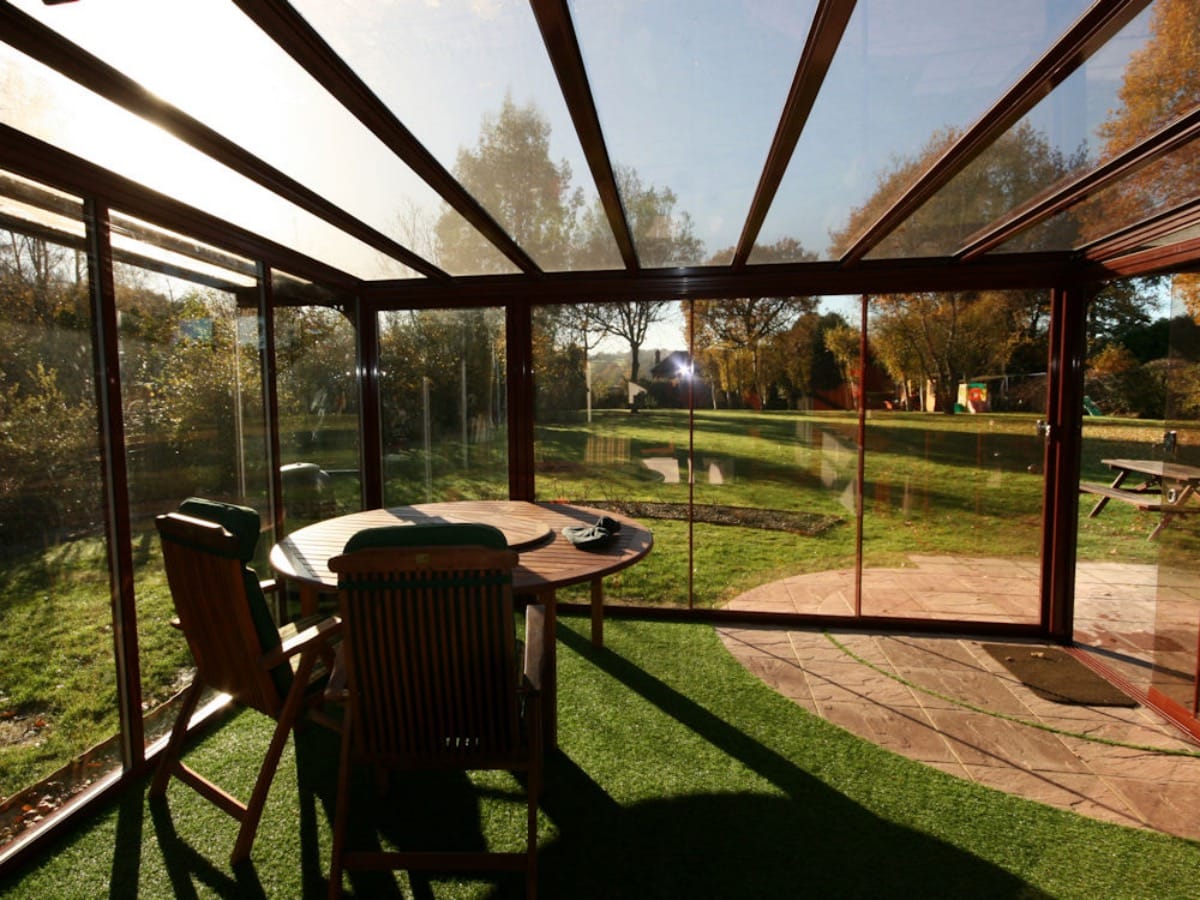
A glass room is a fully enclosed structure with both a glass roof and glass walls — typically floor-to-ceiling sliding glass panels. It seals the space completely against wind, rain and cold, creating a room that feels like a genuine interior space with panoramic garden views.
Because the space is fully enclosed, it can be independently heated and cooled, making it genuinely usable every day of the year. Many homeowners across Kent and the South East use their glass room as a dining room, sitting room, home office or entertainment space — a room that happens to look directly out onto the garden.
Glass rooms are typically lean-to structures, built against the rear wall of the house. The sliding walls can fold back on warm days, converting the room into an open covered patio. Our glass rooms page covers the full specification and accessory options in detail.
What Is a Glass Veranda?

A glass veranda has a fixed glass roof but open or partially enclosed sides. It provides permanent overhead protection — keeping you dry in the rain and shaded in the sun — while keeping the space connected to the garden on all sides.
The defining quality of a glass veranda is that outdoor feel. There are no walls between you and the garden, so the air circulates freely, the sounds carry through, and the space feels genuinely outside. For customers across the South East who love spending time in the garden but want reliable overhead shelter, a glass veranda is the natural choice.
Glass verandas work reliably from spring through autumn. Many of our customers add optional sliding glass side panels as an upgrade — effectively converting their veranda into a glass room when the weather demands it. Explore our full glass veranda range to see the options.
Not sure which is right for you?
Book a free home survey and one of our specialist advisers will visit your property across Kent, the South East or anywhere in England and Wales. No obligation, no pressure.
Glass Room vs Glass Veranda: At a Glance
| Glass Room | Glass Veranda |
|---|---|
| Fully enclosed — glass roof and glass walls | Overhead glass roof — sides open or optional |
| Year-round use in all weathers | Spring to autumn reliably; winter use limited |
| Indoor feel with panoramic garden views | Outdoor feel with overhead protection |
| Independently heated and cooled | Relies on ambient temperature |
| Functions as an additional room | Functions as a sheltered outdoor space |
| Typically £20,000–£45,000+ installed | Typically £12,000–£25,000 installed |
| May require building regulations consideration | Typically straightforward Permitted Development |
| More complex installation, longer lead time | Faster installation, less disruptive |
Enclosure and Year-Round Use
This is the most important practical difference. A glass room is genuinely usable 365 days a year. Close the sliding walls on a wet January evening and you have a warm, weatherproof room. A glass veranda is a seasonal space — brilliant from spring through autumn across the South East, far less useful in the depths of a British winter.
If your goal is to extend your outdoor season by a few months, a veranda will deliver that. If you want a space that functions as a room — hosting Christmas dinner, running a home office through the winter, or having somewhere comfortable to sit on grey February afternoons — you need a glass room.
Worth knowing: Many veranda systems support optional sliding glass side panels as an upgrade. Adding these converts your veranda into a fully enclosed glass room. If you are undecided, specifying a system that supports this upgrade path can be a practical way to start with a veranda and enclose it later without replacing the structure.
Planning Permission
In most cases, neither a glass room nor a glass veranda requires planning permission on a standard residential property in England and Wales, as both typically qualify as Permitted Development. Glass rooms can sometimes attract building regulations consideration, particularly regarding thermal performance, as they create a fully enclosed space.
Properties in conservation areas and listed buildings always require full planning permission regardless of structure type. If your property is in a conservation area in Kent or elsewhere in the South East, our surveyors will identify this at the initial visit and guide you through the correct process.
Cost
As a general guide based on installations across Kent, the South East and England and Wales:
| Glass Room | Glass Veranda |
|---|---|
| Entry level from £20,000 | Entry level from £12,000 |
| Mid-range £25,000–£35,000 | Mid-range £18,000–£25,000 |
| Fully specified £35,000–£45,000+ | Fully specified £25,000–£35,000+ |
Both products add value to a property. A glass room typically generates a larger value uplift because it creates genuine additional usable floor space, which estate agents and buyers treat similarly to a formal extension.
Which Is Right for You?
Choose a glass room if:
- You want to use the space every day, including in winter
- You need a climate-controlled environment for a home office, dining room or sitting room
- You want the structure to function as an additional room rather than an outdoor feature
- Budget allows for the higher investment
Choose a glass veranda if:
- You want to extend your outdoor season without full year-round enclosure
- You prefer an open, outdoor feel — staying connected to the garden rather than enclosed from it
- You want a simpler, faster and less expensive installation
- You would like the option to add enclosure later as an upgrade
Ready to find out which suits your property?
Our specialist advisers cover Kent, the South East and the whole of England and Wales. Book a free home survey and we will help you choose the right option and provide a detailed no-obligation quotation.
Book Your Free Survey → | Call free: 0800 074 2721
Frequently Asked Questions
What is the main difference between a glass room and a glass veranda?
A glass room is fully enclosed with both a glass roof and glass walls, creating a weatherproof space usable year-round. A glass veranda has a glass roof but open sides, making it a covered outdoor shelter rather than an enclosed room. The glass room functions like an additional room in your home; the veranda functions as a protected outdoor space.
Which is more expensive — a glass room or a glass veranda?
A glass room is typically more expensive, starting from around £20,000 installed and rising to £45,000+ for fully specified examples. A glass veranda generally starts from around £12,000, with fully specified examples reaching £25,000–£35,000. The difference reflects the additional glazing, framing and weatherproofing work required for full enclosure.
Do I need planning permission for a glass room or veranda in Kent?
Most installations in Kent and across the South East qualify as Permitted Development, so no planning application is needed — provided standard size and position criteria are met. Properties in conservation areas or listed buildings require a full planning application. Our surveyors will advise on the correct process for your property at the initial survey visit.
Can a glass veranda be converted into a glass room?
Yes — many glass veranda systems are designed to accept optional sliding glass side panels as an upgrade, which fully encloses the space. If this upgrade path interests you, it is worth specifying a system that supports it from the outset so the structural provision is already in place.
Are glass rooms and glass verandas the same as conservatories?
No, though there is some overlap in appearance. A conservatory is typically a brick-based or solid-foundation extension with glass walls and a glass or polycarbonate roof, treated as a structural addition to the house. A glass room and glass veranda are lighter aluminium-and-glass structures installed on an existing patio or decking, generally quicker and less expensive to install, and with a more contemporary aesthetic.
Explore Glass Rooms and Glass Verandas from SBI
SBI are a family-run business established in 1998, specialising in the design, supply and installation of glass rooms and glass verandas across Kent, the South East and throughout England and Wales. With more than 400 five-star reviews from completed installations, we have the experience to help you make the right choice and install it to the highest standard.
View glass rooms and book your free survey | View glass verandas | Request a free quotation | View our installations map